Fieldwork

Fieldwork · Work

Software we built, and still run.

These aren't client case studies. They're our own systems, and each one is carrying real data today. For every one we say what the hard part was, because that's the part you'd be paying us for.

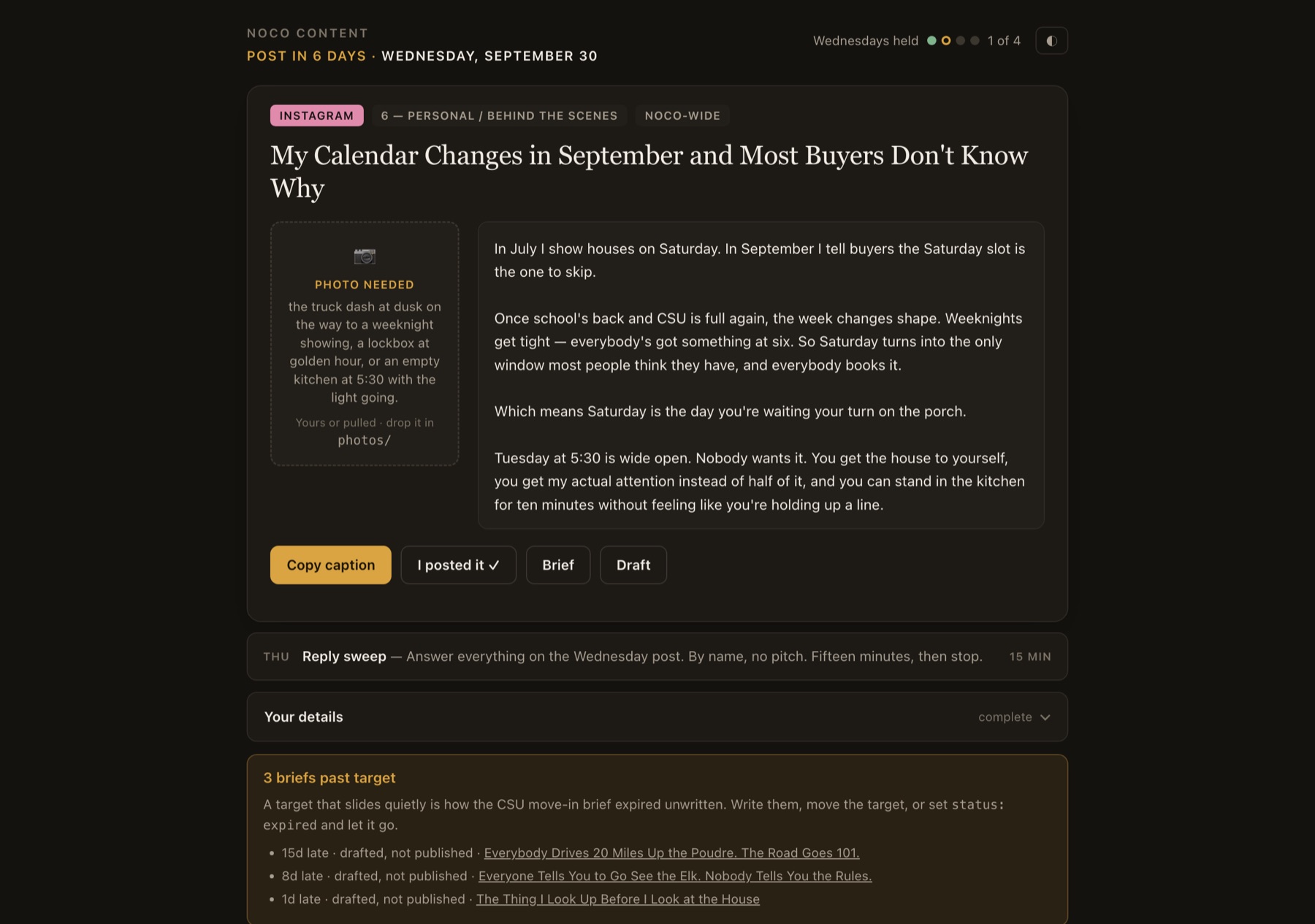
DealFlow's pipeline board with sample client cards in four stages. 1 2
Fig. 01The pipeline, sample data, drawn with the app's own stylesheet.
Fig. 01 · Real-estate CRM · Live, with real users

DealFlow CRM

A CRM for real-estate agents: pipeline, follow-up, deal underwriting and a live listings feed, in one app that installs to the desktop.

The hard partRunning on a licensed MLS feed. That brings retention rules, an erasure requirement that rules out point-in-time backups, a compliance register and an attorney memo, all maintained by one person.

42,190
listings, synced twice a day
13
server functions
1
maintainer
  1. The board totals live dollar volume, so the number that matters is the first thing on screen.
  2. A follow-up that's slipped turns red on the card. Nobody has to remember to check.
Read the build →

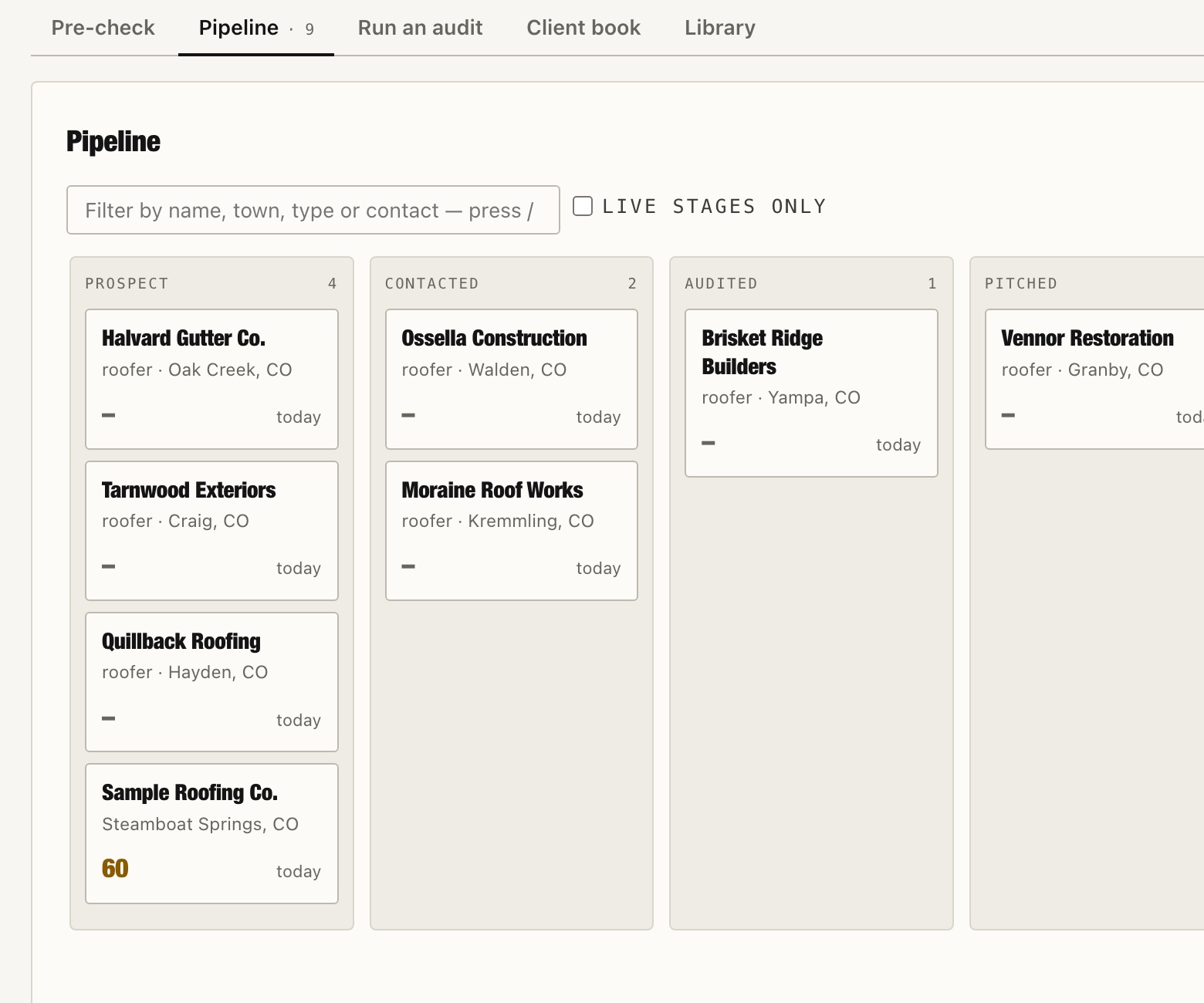
The Fieldwork app's pipeline board with invented sample businesses. 1 2 3
Fig. 02aThe pipeline. Invented businesses; no real clients shown.
Fig. 02 · Desktop app · Runs every audit

The Fieldwork audit tool

The app behind the report: it measures a business, scores it, prints the PDF, and keeps the client book and pipeline in one place.

The hard partA scoring rubric that reports "Unverified" instead of inventing a zero. It also runs two separate rubrics, because scoring an online-only brand on a map pin it can't have would be dishonest.

51
trades, each with its own directories
2
rubrics: storefront and online
100
points, every one traceable
  1. Seven stages, the same ones our sales process uses. Software and process can't disagree.
  2. The last audit's score sits on the card. A re-audit shows what moved.
  3. One filter across every stage. "Where's that roofer I talked to" is a single search.

Read the build →

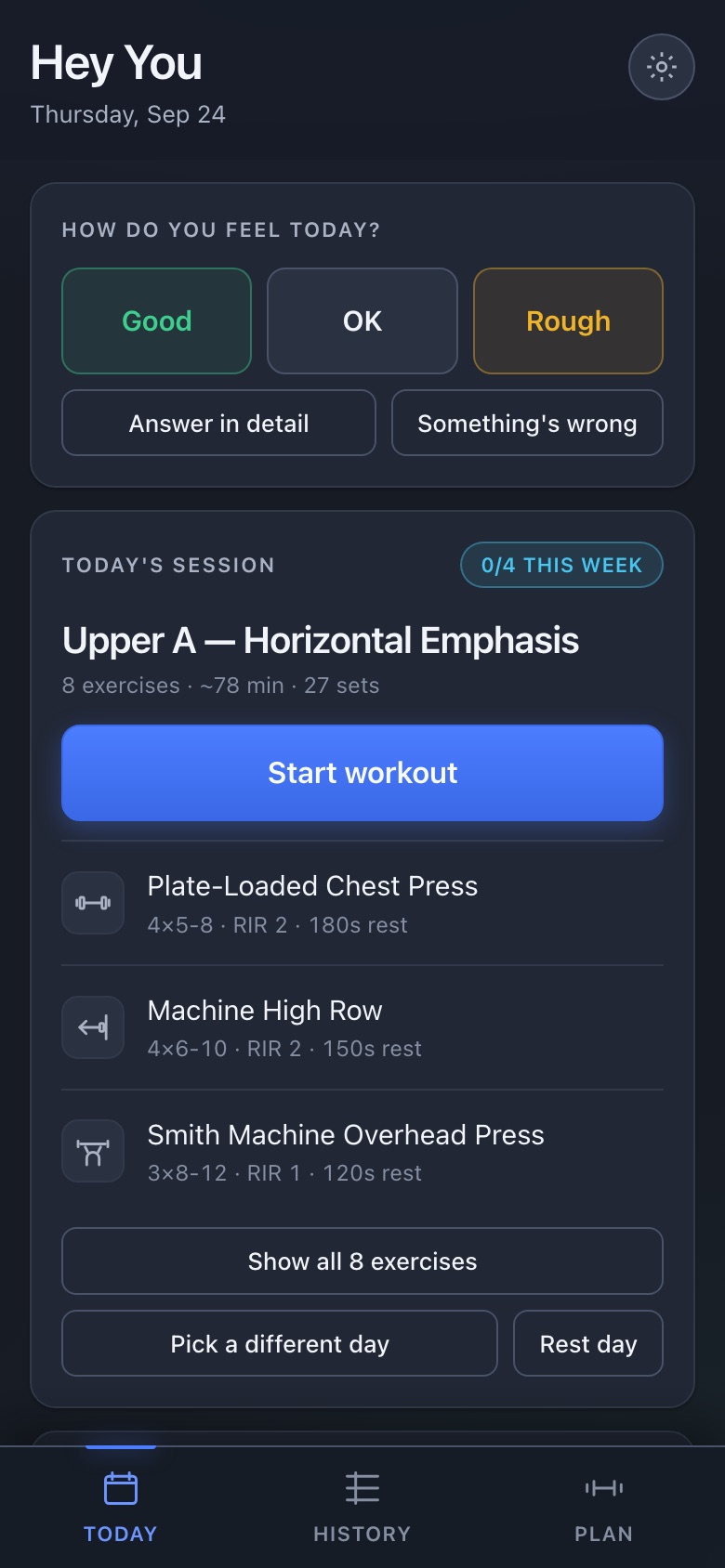
Sourced's weekly screen: the next post with its caption, a photo brief, and briefs past their target date. 1 2 3
Fig. 03The weekly screen.
Fig. 03 · Content system · Regulated industry

Sourced

A content engine for real-estate marketing that won't publish a claim it can't source.

The hard partA blocking legal gate. Nothing reaches a person until the fair-housing and attribution checks pass, and every number has to come from a dated source that expires.

1
post a week, and one thing to do
3
layers: facts, briefs, drafts
Dated
sources on every number
  1. Opens on the one post due next and how many days are left. Everything else is secondary.
  2. Says which photo is needed, not just that one is.
  3. Reports its own slippage. A missed target is shown, not quietly dropped.

Read the build →

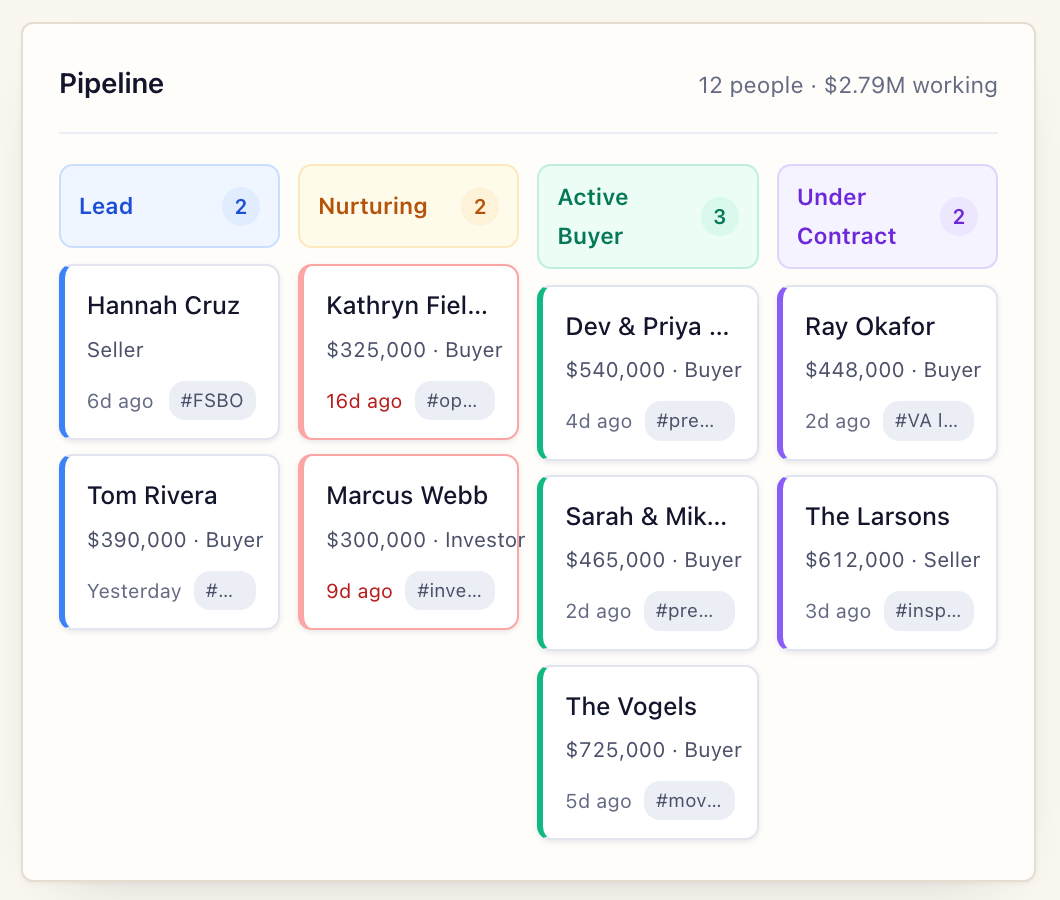
Health OS on a phone: a daily check-in, today's training session and exercise list. 1 2 3
Fig. 04The today screen.
Fig. 04 · Phone app · Works with no signal

Health OS

A training and nutrition app that installs to the phone and keeps working with no signal.

The hard partBeing genuinely offline. The data lives on the phone and nothing needs a round trip. It works on a chairlift, which is the demo for any crew working where there's no cell service.

684KB
the whole app, one file
0
servers needed to use it
1
tap to install, no app store
  1. A daily check-in that changes the day's plan, not just logs a mood.
  2. Progress for the week sits in the corner of the card, not on a separate screen.
  3. Installs from the browser to the home screen. No store review, no update queue.

Read the build →

What we can't show you yet is a client result.

We're not going to pretend otherwise. These four are ours. Client work starts this year, and the first twelve clients get 20% off in exchange for letting us tell their story. How that works

If being early bothers you, wait and read the case studies in six months. If it doesn't, you get the same work for less and our full attention.